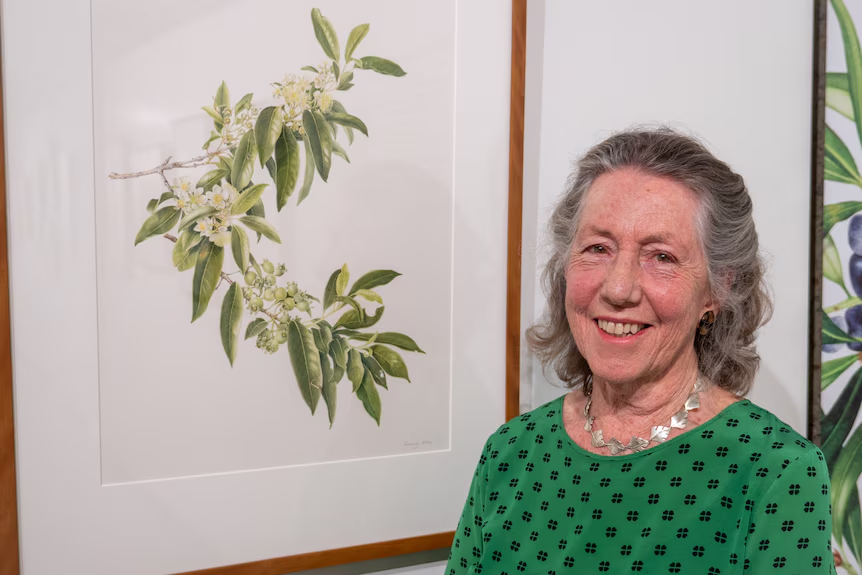
Have you ever looked at a flower and wished you could freeze its beauty forever? That is exactly what Beverley Allen does with her incredible art. Based in Sydney, Australia, she is not just a painter; she is a storyteller of the natural world. Since starting her journey into botanical art in 1997, she has become one of the most respected names in the field. Her work is famous for being “life-sized,” which means she paints plants exactly as big as they are in real life. Imagine seeing a giant lily or a detailed orchid on paper that looks like you could reach out and touch it!
Beverley Allen didn’t start out as a plant artist, though. She spent many years working in graphic design and advertising. However, after seeing a beautiful book by Shirley Sherwood, her heart was captured by the world of plants. Today, she spends her days in her garden or at the Sydney flower markets, looking for the perfect subject to paint. Her style is a mix of scientific accuracy and deep, soulful beauty. It’s no wonder that people all over the world, from London to Tokyo, want to see her latest creations.
Quick Facts About Beverley Allen
| Category | Details |
| Full Name | Beverley (Beverly) Allen |
| Birth Year | 1945 |
| Nationality | Australian |
| Primary Medium | Watercolor on Arches paper or Calfskin Vellum |
| Key Style | Life-sized, realistic botanical portraits |
| Famous Works | Tongue Orchid, Gymea Lily, Yellow Lotus |
| Major Role | Co-founder of The Florilegium Society (Sydney) |
| Awards | RHS Gold Medal, ASBA Diane Bouchier Award |
From Graphic Design to Botanical Beauty
Before she was a famous botanical artist, Beverley Allen had a very different career. She worked as a package designer for makeup companies and in big advertising agencies. This background gave her a “laser-sharp” eye for detail. In 1995, she earned her Bachelor of Fine Arts from Sydney University, but it wasn’t until 1997 that she truly found her calling. After attending an exhibition of botanical art, she realized that she wanted to combine her love for drawing with her passion for nature.
Transitioning into a new career isn’t always easy, but Beverley Allen made it look natural. She began studying with experts like Jenny Phillips and soon found her own unique voice. Her paintings aren’t just pretty pictures; they are highly accurate records of plant life. By 1998, she was already making a name for herself in the art world. She proved that it is never too late to follow your passion and become a master of a new craft.
The Secret Technique of Watercolor on Vellum
One of the most interesting things about Beverley Allen is the material she uses. While many artists use regular paper, she often chooses “calfskin vellum.” This is an ancient material that is very smooth and translucent. When she applies her watercolor paint to vellum, the colors seem to glow from within. It allows her to layer pigment over pigment to create a “sculptural” look. This technique is very difficult and requires a lot of patience, but the results are absolutely breathtaking.
When she isn’t using vellum, she uses large sheets of Arches paper for her life-sized works. To get the best light, she actually props her paper up almost vertically on a drawing table. Beverley Allen keeps her subjects on a wheeled trolley so she can move them around as the sun moves through her studio. This helps her capture the tiny shadows and highlights that make her plants look so real. It’s this dedication to the “light and life” of the plant that sets her work apart.
Leading the Florilegium Society in Sydney
Beverley Allen is not just an artist who works alone; she is a leader in the art community. In 2005, she helped start The Florilegium Society at the Royal Botanic Garden in Sydney. She served as the president of this group for many years. The goal of the society is to create a permanent collection of botanical paintings that celebrate the plants in the garden. Because of her hard work, many artists have donated their paintings to help protect the history of these plants for future generations.
Under her leadership, the society published books like “The Florilegium” to celebrate 200 years of the Royal Botanic Gardens. Beverley Allen believes that botanical art is a vital way to connect people with science and history. She continues to serve on committees and help young artists find their way. Her influence has helped make Sydney a world center for botanical illustration, proving that art can be a powerful tool for education and conservation.
Winning Gold: Awards and International Recognition
The art world has definitely noticed how talented Beverley Allen is. Over the years, she has won some of the most prestigious awards an artist can receive. In 2007, she won a Gold Medal from the Royal Horticultural Society (RHS) in London. Just a few years later, in 2010, she received the first-ever Gold Medal for Botanical Art from the New York Botanical Garden. These awards are like the “Olympics” of the botanical art world, and winning them shows just how skilled she is.
But the honors didn’t stop there. In 2016, she was given the Diane Bouchier Artist Award for Excellence in Botanical Art. This was a huge moment because it recognized her overall contribution to the field. Most recently, in 2023, she won the Shirley Sherwood Award. This award is special because it is given to artists who have done a lot to promote botanical art globally. Beverley Allen is truly a “force of nature” whose hard work has inspired people all across the globe.
Where Can You See Her Botanical Masterpieces?
If you want to see the work of Beverley Allen in person, you might have to travel a bit! Her paintings are held in some of the most famous collections in the world. You can find her art at the Kew Gardens in London and the Hunt Institute in the USA. Even royalty appreciates her work—her paintings are part of the Highgrove Florilegium, which belongs to the King of the United Kingdom. This shows that her art has a truly universal appeal that transcends borders.
In Australia, she has been a regular at the “Botanica” exhibition at the Royal Botanic Garden Sydney for over twenty years. Her work has also been shown in cities like Tokyo, Amsterdam, and Chicago. Whether it is a small painting of a thistle or a massive 7-foot painting of a Tongue Orchid, her art leaves a lasting impression. Many people who visit these galleries are shocked to find that her paintings are actually watercolors because the detail is so sharp and the colors are so vibrant.
Teaching the Next Generation of Artists
Beverley Allen isn’t just focused on her own success; she loves to share her secrets with others. For over 12 years, she has been teaching master classes on realism and botanical painting. She teaches students how to observe plants closely and how to use light to make their drawings pop. Many of her students travel from far away just to learn her unique watercolor techniques. She often tells her students to “paint the plants that move you” and to always work from real life, not photos.
By teaching, Beverley Allen ensures that the tradition of botanical art stays alive. She shows people that you don’t need a fancy camera to capture nature; you just need a sharp eye and a lot of practice. Her workshops at the Royal Botanic Garden are very popular because she explains things in a simple, friendly way. She makes her students feel like they are part of a special community of nature lovers. It is this kindness and willingness to help others that makes her a true leader.
The Importance of Botanical Accuracy
Why does Beverley Allen work so hard to make every leaf and petal look perfect? In the world of botanical art, accuracy is everything. Scientists often use these paintings to identify different species of plants. A photo can sometimes miss the tiny details, like the texture of a stem or the exact shade of a seedpod. Beverley Allen uses her skills to record these details so they aren’t lost to time. This makes her work both a piece of art and a valuable scientific record.
Even though she focuses on accuracy, she still brings a lot of “emotion” to her work. She looks for the “personality” of each plant. For example, she might paint a leaf that has been slightly nibbled by an insect or a flower that is just beginning to wilt. This makes the plant feel alive and tells a story about its life in the garden. Beverley Allen believes that by showing the real, imperfect beauty of nature, she can help people appreciate the environment even more.
Exploring Her Most Famous Plant Portraits
When we talk about Beverley Allen, a few specific paintings always come to mind. One of her most famous is the Bulbophyllum fletcherianum, also known as the Tongue Orchid. It is a huge, dramatic painting that captures the dark, burgundy colors of the flower perfectly. Another fan favorite is her painting of the Gymea Lily. These lilies are native to Australia and are known for their massive red flower heads. Beverley’s version is so detailed that you can see every tiny fiber of the plant.
She also loves to paint more common plants, like pomegranates and chestnuts. One of her recent favorites was a White Bat Flower, which she watched slowly open in her garden over several weeks. Whether she is painting a rare orchid from a tropical greenhouse or a simple thistle from a roadside, Beverley Allen gives every subject the same amount of love and attention. This variety is what makes her portfolio so exciting to explore for art lovers and plant enthusiasts alike.
Why Botanical Art Matters Today
In a world full of digital screens and fast-paced living, the work of Beverley Allen reminds us to slow down. Botanical art requires us to look at the world with patience and wonder. It teaches us about the plants that provide our food, our medicine, and our oxygen. By highlighting the beauty of Australian native plants, Beverley Allen also helps promote conservation. When people see how beautiful a rare plant is, they are more likely to want to protect it from disappearing.
Her career shows us that art and science can go hand in hand. Beverley Allen has spent decades bridging the gap between the two, and the world is a more beautiful place because of it. Whether she is leading a society, teaching a class, or quietly painting in her studio, her impact is huge. She is a true inspiration for anyone who loves nature and wants to see it preserved through the power of art.
Conclusion: A Legacy in Bloom
Beverley Allen has spent her life turning simple plants into works of high art. From her early days in graphic design to her current status as a world-renowned botanical painter, her journey is one of passion and precision. She has won the highest awards, led important societies, and taught thousands of people how to see the world differently. Her life-sized watercolors will continue to inspire and educate people for many years to come.
If you’re feeling inspired, why not take a closer look at a plant in your own backyard today? You might just see the world through the eyes of an artist!
Frequently Asked Questions (FAQs)
1. What is Beverley Allen most famous for?
She is most famous for her highly detailed, life-sized botanical watercolor paintings. She is also well-known for co-founding the Florilegium Society in Sydney.
2. What materials does Beverley Allen use for her art?
She primarily uses watercolor paints. She often paints on large sheets of Arches paper or on traditional calfskin vellum, which gives her work a unique glow.
3. Has Beverley Allen won any major awards?
Yes! She has won Gold Medals from the Royal Horticultural Society in London and the New York Botanical Garden. She also received the Diane Bouchier Award for Excellence.
4. Where is Beverley Allen from?
She was born in Sydney, Australia, in 1945. Most of her work features plants that are native to Australia or grown in her own garden in Sydney.
5. Does Beverley Allen teach art classes?
Yes, she has been teaching master classes in botanical art for over 12 years. She often teaches at the Royal Botanic Garden in Sydney and internationally.