
Discover everything about a full liquid diet, including safe foods, easy menus, bariatric tips, and helpful ideas explained in simple terms.
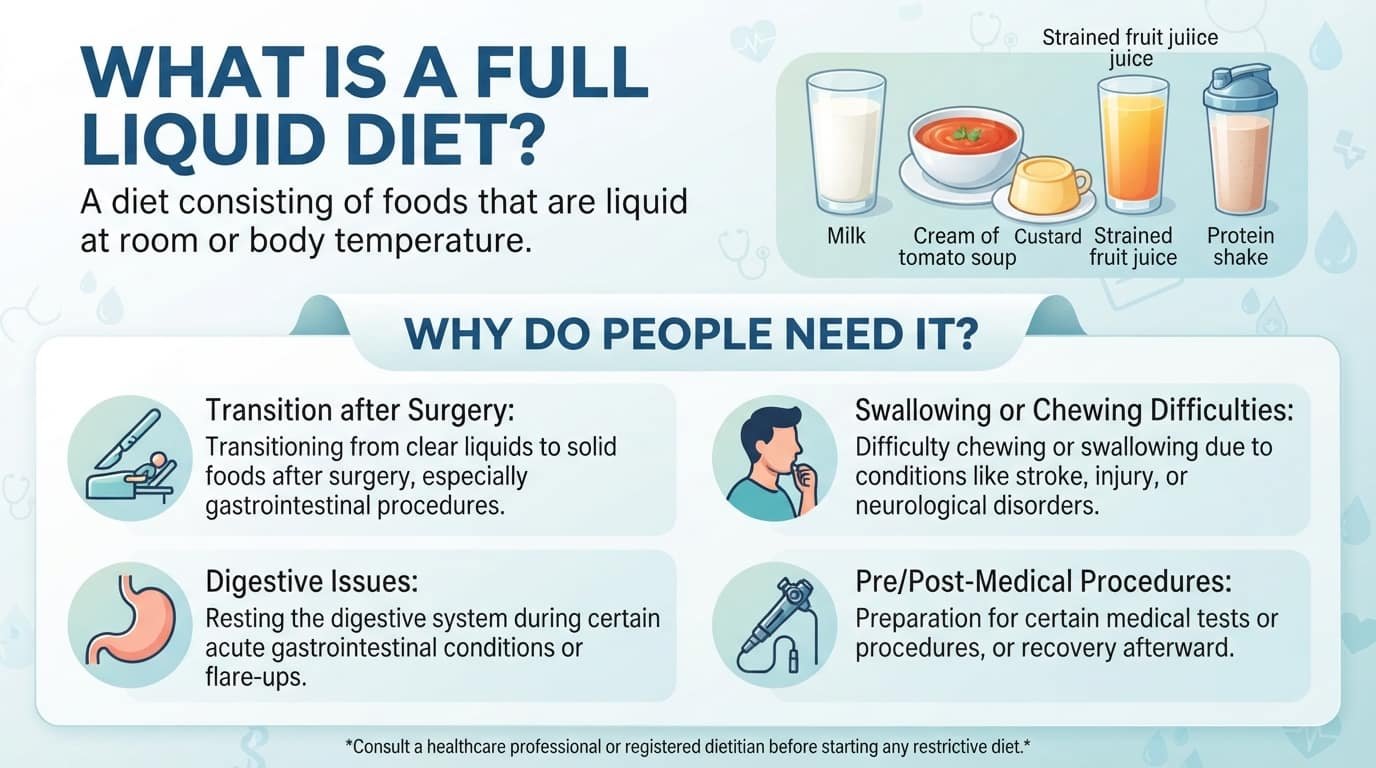
A full liquid diet is a special eating plan made up of only liquids and foods that turn into liquid at room temperature. Doctors often suggest this plan when your tummy or throat needs a gentle break. You might need it before or after a medical procedure, or if you have trouble chewing solid food. It lets your body rest and heal while still giving you important energy and nutrients. Many people wonder what is a full liquid diet exactly, and the simple answer is that it bridges the gap between clear liquids like water or broth and regular solid foods.
Thinking about your favorite creamy soups or warm broths can make this routine feel much easier. When I help people look at this diet, I always remind them that it is temporary, and your regular meals will return soon enough.
Understanding the Basics of Safe Liquid Eating
When you follow a full liquid diet, your main goal is to keep your body strong without giving your digestive system too much heavy work to do. You will drink liquids that you can easily see through, plus foods that are creamy or blended smooth.
It is very important to drink plenty of water and other approved drinks throughout the day so you do not get dehydrated. Listening to your body helps you figure out what feels good in your tummy and what makes you feel tired.
Doctors and nurses design these plans carefully to make sure you get enough protein, vitamins, and minerals. Even though you are not chewing crunchy snacks, you can still enjoy lots of comforting flavors and warm cups of tea or smooth yogurt drinks.
Best Foods to Include on Your Daily Menu
Choosing the right items makes a huge difference in how you feel each day. The best full liquid diet foods include strained creamy soups, smooth yogurt, fruit juices without pulp, and thin cooked cereals like cream of wheat.
You can also enjoy milk, melted ice cream, and protein shakes that keep your energy levels steady. Mixing up your choices stops you from getting bored with the same old routine.
Try adding a splash of vanilla or a little honey to your warm milk for a comforting treat. Keeping your kitchen stocked with these simple, smooth options helps you stay on track and keeps your tummy happy all day long.
Simple and Practical Meal Plan Ideas
Planning your daily meals ahead of time makes sticking to your routine so much easier. Good full liquid diet ideas include starting your morning with a warm, thin bowl of oatmeal soup or a smooth fruit smoothie.
For lunch, you can sip on a warm, strained tomato soup paired with a glass of apple juice. Dinner can be a comforting bowl of blended vegetable soup mixed with a little milk for extra creaminess.
Snacking is also allowed, and you can enjoy pudding, custard, or a refreshing glass of buttermilk between your main meals. Writing down your favorite combinations on a piece of paper helps you stay organized and excited for your next tasty sip.
Creating Your Own Custom Weekly Schedule
Having a structured timetable takes the guesswork out of what to eat next. A well-organized full liquid diet menu ensures you never miss a meal and always get enough fuel.
Your schedule can feature different flavors for every single day of the week so your taste buds stay happy. For example, Monday can be all about creamy potato soup, while Tuesday brings sweet fruit smoothies and warm cocoa.
Sticking to regular meal times also keeps your blood sugar steady and stops you from feeling too hungry. You can easily print out your weekly plan or keep it right on your fridge where you can see it clearly every morning.
Special Guide for Bariatric Surgery Patients
People who go through weight loss surgery often need a very specific eating plan to help their healing tummies. A bariatric full liquid diet is designed to protect new stomach lines while providing essential protein and hydration.
Doctors and dietitians monitor these recovery steps very closely to keep patients safe and strong. You will start with tiny sips and slowly work your way up to thicker, protein-rich shakes and smooth broths.
Patience is your best friend during this healing phase because your body is working hard to adjust to its new shape. Every small, healthy sip brings you one step closer to your long-term health and wellness goals.
Where to Find Printable Guides and Schedules
Having a physical checklist in your hands can make following your health plan feel much simpler and clearer. Many people look for a helpful bariatric full liquid diet menu pdf that they can download, print, and keep on their kitchen counter.
You can also find a general full liquid diet menu pdf online or ask your doctor for official hospital handouts. Having these guides printed out lets you check off every meal and track your daily fluid intake with zero stress.
It is always smart to keep a backup copy near your desk or in your bag so you can check your food options wherever you go. Simple tools like printed schedules turn a confusing routine into an easy daily checklist.
Can You Eat Eggs During This Recovery Phase?
A very common question people ask is are eggs on a full liquid diet allowed in your daily meals. The strict rule is that whole, scrambled, or fried eggs are considered solid foods and are not allowed on this specific plan.
However, you can sometimes use smooth, well-blended egg custard or protein drinks that contain safe egg white protein powders if your doctor approves them. Always check with your medical team before adding any new blended ingredients to your daily cup.
Keeping your meals safe and smooth protects your tummy and ensures you follow your healing instructions correctly. When you finally heal up, you can enjoy your favorite fluffy eggs again!
Tips for Staying Motivated and Hydrated
Drinking enough fluids every single day can sometimes feel like a full-time job when you are used to eating regular meals. Try using a fun, colorful cup or a straw to make sipping your broths and juices more enjoyable.
Setting gentle reminders on your phone can also help you remember to take a sip every twenty minutes or so. If your drinks feel too cold, try warming up your broths and milk to make them feel more like a real, cozy meal.
Remember to be kind to yourself on days when you miss chewing your favorite foods. Staying positive and focused on your health makes the healing journey feel shorter and much brighter.
Summary of Detailed Nutritional Information
| Food Category | Allowed Items | Items to Avoid |
| Dairy & Milks | Milk, yogurt, custard, pudding | Yogurt with fruit chunks, hard cheese |
| Soups & Broths | Strained cream soups, clear broth | Chunky vegetable soup, chili |
| Fruits & Juices | Apple juice, grape juice, strained citrus | Whole fruits, fruit slices, pulp |
| Grains & Cereals | Thin cream of wheat, strained oatmeal | Rice, pasta, dry cereal, bread |
Frequently Asked Questions
What can I drink on a full liquid diet?
You can enjoy milk, yogurt, strained creamy soups, smooth fruit juices without pulp, thin cooked cereals, and protein shakes.
How long do I need to stay on this diet?
Your doctor will tell you how many days or weeks you need to follow this plan based on your personal health and healing progress.
Can I have coffee or tea?
Yes, you can usually have coffee and tea, but you should check with your doctor and use milk or cream instead of heavy solid creamers.
Is ice cream allowed?
Yes, plain ice cream, sherbet, and frozen yogurt are generally allowed because they melt into liquid at room temperature.
How do I make sure I get enough protein?
You can mix unflavored protein powder into your soups, milk, and shakes to keep your energy levels high throughout the day.
Can I blend regular food to eat it?
You should only blend foods if your doctor or dietitian gives you specific permission and instructions on how to do it safely.
Conclusion
Taking care of your body with a full liquid diet is a great way to help your tummy rest, heal, and recover safely. Even though missing your favorite crunchy snacks can be tough, this temporary routine is full of comforting soups, sweet puddings, and nourishing shakes.
By using simple schedules, listening to your medical team, and staying positive, you can breeze through this healing phase with confidence. What is your favorite warm soup or smoothie flavor to enjoy during your recovery days? Share your thoughts below and keep up the wonderful work on your health journey!