
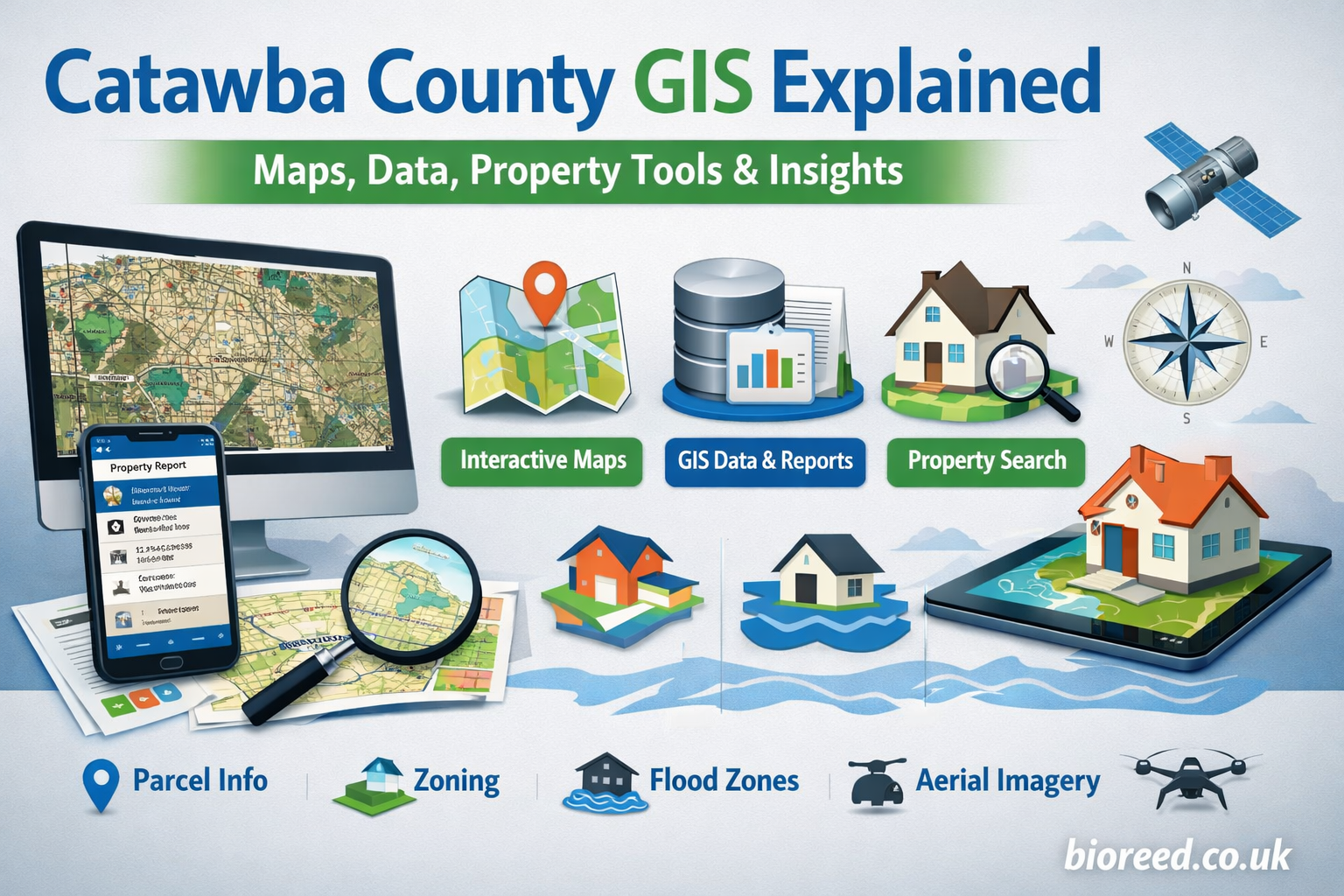
Catawba County GIS: The Definitive Guide to Maps, Data, and Local Insight
Geographic Information Systems have quietly become one of the most powerful public tools in local government, and nowhere is that more evident than in Catawba County. From property ownership and zoning to infrastructure planning and emergency response, spatial data now shapes how residents, professionals, and institutions understand their surroundings.
This guide explores catawba county gis as a practical, real-world resource rather than a technical abstraction. Whether you are researching property, managing land use, supporting business decisions, or simply learning how your county works beneath the surface, this article is designed to be your authoritative reference.
Understanding Geographic Information Systems at the County Level
Geographic Information Systems, commonly known as GIS, combine maps with databases to visualize and analyze spatial relationships. At the county level, GIS turns raw records into layered, interactive insights that are accessible to the public.
In Catawba County, GIS functions as a shared infrastructure connecting tax records, zoning regulations, environmental data, and transportation networks. This integration allows users to move beyond static maps and explore how data points interact across geography.
The Role of Catawba County in Regional Data Management
catawba county gis Catawba County sits at a crossroads of residential growth, industrial activity, and natural resources. Managing these competing interests requires precise geographic data that can adapt to change over time.
The county’s GIS program supports this responsibility by maintaining accurate, continuously updated spatial datasets. These datasets help ensure consistency across departments, from planning and utilities to emergency management and public works.
What Makes Catawba County GIS a Public Resource
Unlike proprietary mapping platforms, county GIS systems are designed for transparency and accessibility. They exist to serve residents, not just internal staff or contractors.
Catawba county gis provides public-facing tools that allow anyone to search parcels, view zoning boundaries, and understand land characteristics. This open access empowers informed decision-making at every level of the community.
Core Data Layers Available Through the GIS System
A GIS platform is only as useful as the data it contains, and Catawba County offers an unusually comprehensive collection. Core layers typically include parcels, addresses, roads, waterways, flood zones, and municipal boundaries.
Additional layers expand the system’s value by incorporating aerial imagery, soil classifications, school districts, and voting precincts. Together, these layers create a multi-dimensional view of the county’s physical and administrative landscape.
Parcel Mapping and Property Identification
Parcel mapping is one of the most frequently used features within catawba county gis. Each parcel represents a legally defined piece of land linked to ownership, valuation, and land-use records.
By clicking on a parcel, users can quickly access property boundaries, acreage, and identification numbers. This functionality simplifies tasks that once required in-person visits or manual record searches.
Property Ownership and Tax Assessment Integration
GIS parcel data is closely connected to tax assessment records, making property research more efficient. Users can see ownership information alongside assessed values and improvement details.
This integration reduces confusion and improves accuracy for buyers, sellers, and professionals who depend on up-to-date property information. It also supports fair and consistent taxation across the county.
Zoning and Land Use Visualization
Zoning codes can be difficult to interpret when presented as text alone. GIS transforms these regulations into visual boundaries that are far easier to understand.
Through interactive zoning layers, catawba county gis allows users to see exactly how land is regulated. This clarity helps property owners avoid costly mistakes and supports planners in guiding sustainable development.
Planning and Development Applications
Urban and rural planning rely heavily on spatial context. GIS enables planners to assess how proposed developments interact with existing infrastructure and environmental constraints.
In Catawba County, GIS supports scenario analysis for growth, traffic flow, and public service demand. These insights help leaders make data-driven decisions that balance progress with preservation.
Environmental and Natural Resource Mapping
Environmental data is a critical component of modern GIS systems. Layers showing wetlands, floodplains, and watersheds help protect sensitive ecosystems.
Catawba county gis integrates environmental mapping to support conservation efforts and regulatory compliance. This approach ensures that development respects natural limitations and long-term sustainability.
Floodplain and Risk Assessment Tools
Flood risk is a growing concern for many communities, including those in North Carolina. GIS plays a vital role in visualizing flood zones and elevation data.
Residents and insurers use these tools to assess potential risks, while emergency planners rely on them for preparedness and response strategies. Accurate flood mapping can significantly reduce long-term costs and hazards.
Transportation and Infrastructure Data
Road networks, bridges, and utility corridors are all represented within the GIS framework. These layers provide insight into how people and resources move across the county.
For Catawba County, infrastructure mapping supports maintenance planning and capital investment. It also helps residents understand access, connectivity, and service availability.
Emergency Management and Public Safety Uses
During emergencies, spatial awareness can save lives. GIS allows responders to visualize incidents, resources, and hazards in real time.
Catawba county gis supports public safety agencies by integrating address data, road conditions, and facility locations. This coordination improves response times and situational awareness during critical events.
Economic Development and Business Intelligence
Businesses increasingly rely on location intelligence to guide decisions. GIS data reveals patterns in population density, land availability, and transportation access.
Economic development teams in Catawba County use GIS to attract investment and support local enterprises. By presenting data visually, they communicate opportunities more effectively to stakeholders.
How Residents Use GIS for Everyday Decisions
GIS is not just for professionals; residents use it for everyday questions. Finding property lines, checking zoning, or locating nearby services becomes far easier with interactive maps.
The accessibility of catawba county gis encourages civic engagement. When residents understand their environment, they participate more confidently in local discussions and decisions.
Accessibility and User-Friendly Design
Modern GIS platforms emphasize usability. Clear interfaces, searchable maps, and intuitive tools reduce the learning curve for new users.
Catawba County has invested in making its GIS resources approachable without sacrificing depth. This balance ensures both casual users and experts can find value in the system.
Data Accuracy and Update Cycles
Accuracy is essential for trust in any data system. GIS data is maintained through regular updates, field verification, and cross-departmental coordination.
In Catawba County, update cycles vary by dataset, but the goal remains consistency and reliability. Transparent maintenance practices help users understand data limitations and strengths.
Common Misconceptions About County GIS Systems
One common misconception is that GIS data is static or outdated. In reality, many layers are updated continuously as new information becomes available.
Another misunderstanding is that GIS requires technical expertise to use. While advanced analysis does require training, most public tools are designed for straightforward exploration.
Privacy and Data Ethics Considerations
Public GIS systems must balance transparency with privacy. Not all data can or should be publicly accessible.
Catawba county gis follows established guidelines to protect sensitive information while still providing meaningful insights. This ethical approach maintains public trust and legal compliance.
Comparing GIS Data Uses Across User Groups
Different users approach GIS with different goals, and the system accommodates these varied needs. The table below highlights how major groups typically interact with county GIS data.
| User Group | Primary Use Cases | Key GIS Layers Accessed | Practical Outcomes |
| Homeowners | Property research, zoning checks | Parcels, zoning, aerial imagery | Informed buying and planning |
| Developers | Site selection, feasibility analysis | Land use, infrastructure, flood zones | Reduced risk and clearer approvals |
| Planners | Growth management, policy design | Demographics, transportation, environment | Data-driven planning |
| Emergency Services | Incident response, routing | Addresses, roads, hazards | Faster, safer responses |
| Businesses | Market analysis, logistics | Population, access, parcels | Smarter investment decisions |
This comparison shows how a single GIS platform supports diverse objectives while relying on shared, authoritative data.
Integration With State and Federal Data Sources
County GIS systems do not operate in isolation. They often integrate data from state and federal agencies to enhance accuracy and scope.
Catawba County benefits from alignment with broader datasets, ensuring consistency across jurisdictions. This integration supports regional planning and compliance with regulatory standards.
The Evolution of GIS Technology in Local Government
GIS has evolved from specialized software used by experts to web-based platforms accessible to everyone. This shift reflects advances in computing and data visualization.
Catawba county gis illustrates this evolution by offering modern interfaces while preserving rigorous data management. The result is a system that feels current without sacrificing credibility.
Training and Support Resources
Effective GIS use depends on education and support. Many counties provide tutorials, documentation, and help desks to guide users.
Catawba County recognizes that informed users extract more value from GIS tools. Ongoing support ensures the system remains useful as technology and user expectations evolve.
Real-World Example of GIS Impact
Consider a homeowner planning an addition near a creek. By consulting GIS floodplain layers, they can identify potential risks before construction begins.
As one planning professional noted, “Good GIS data doesn’t just show you where things are; it shows you what’s possible and what’s not.” This perspective captures the practical power of spatial insight.
Future Trends in County GIS Development
Looking ahead, GIS is likely to incorporate more real-time data and predictive analytics. These enhancements will further support proactive decision-making.
For Catawba County, future investments may include enhanced mobile access and deeper integration with smart infrastructure. These trends promise even greater public value.
Conclusion
Catawba county gis stands as a cornerstone of modern local governance, blending transparency, accuracy, and usability into a single platform. Its value lies not just in maps, but in the connections it reveals between land, people, and policy.
By understanding how this system works and how to use it effectively, residents and professionals alike gain a clearer picture of their county. That clarity supports better decisions, stronger communities, and a more informed public.
Frequently Asked Questions About Catawba County GIS
This section addresses common questions users have when first exploring county GIS tools. Each answer is designed to be clear, practical, and easy to apply.
Understanding these basics helps users make the most of catawba county gis without feeling overwhelmed.
What is catawba county gis used for?
Catawba county gis is used to visualize and analyze geographic data related to property, zoning, infrastructure, and the environment. It helps residents and professionals make informed, location-based decisions.
Is GIS data available to the public?
Yes, most layers within catawba county gis are publicly accessible through online mapping tools. Sensitive or restricted information is excluded to protect privacy.
How accurate is the property information?
Property data in catawba county gis is regularly updated using official records and field verification. While highly reliable, users should confirm critical details with county offices when necessary.
Can GIS maps be used for legal purposes?
GIS maps are excellent for research and planning, but they are generally not a substitute for official surveys or legal documents. Catawba county gis is best used as an informational resource.
Do I need special software to access GIS maps?
No special software is required for most users. Catawba county gis is available through web-based platforms designed to work in standard browsers.