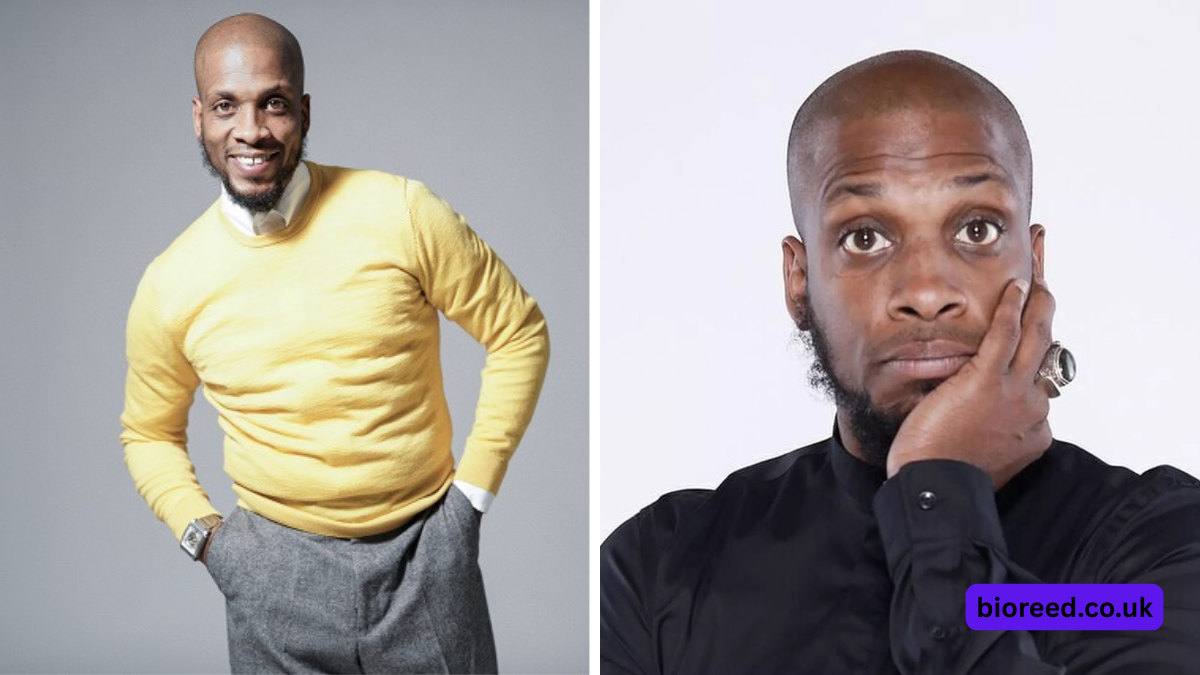

Have you ever looked at a famous painting and wondered what the artist was thinking? Or better yet, what they might have painted underneath the surface? Jeroen Dik is a man who doesn’t have to wonder. As a world-famous scientist and professor, he uses high-tech tools to “see” through layers of paint. His work is like being a detective for art history. He doesn’t use a magnifying glass, though. Instead, he uses X-rays and particle accelerators!
In this article, we will look into the life of Jeroen Dik. We will explore how he became a leader in materials science and why his work with artists like Van Gogh and Vermeer is so important. Whether you love art or science, his story is full of amazing discoveries. He shows us that when we combine different worlds, we find answers to mysteries that have been hidden for hundreds of years.
Early Life and Academic Roots
Jeroen Dik started his journey by studying art history. Most people in that field spend their time in libraries or museums. But Jeroen was different. He was curious about the “stuff” art was made of. He wanted to know why certain paints cracked or why some colors stayed bright while others faded. This curiosity pushed him to learn about chemistry and materials science.
He eventually earned a PhD and became a professor at the Delft University of Technology (TU Delft). Here, he found his home in the Department of Materials Science and Engineering. He realized that a painting isn’t just a picture; it is a physical object made of chemical elements. By studying these elements, Jeroen Dik could learn more about an artist than anyone had ever known before.
Seeing Through Van Gogh
One of the most famous stories about Jeroen Dik involves a painting by Vincent van Gogh called Patch of Grass. For a long time, people knew there might be something behind the green grass, but they couldn’t see it clearly. Traditional X-rays only showed a blurry shape. Jeroen decided to try something much more powerful.
He took the painting to a synchrotron, which is a giant machine that acts like a super-powered X-ray. By mapping the chemical elements like mercury and antimony, Jeroen Dik was able to recreate a color image of a hidden portrait! Underneath the grass was a painting of a peasant woman. This discovery showed that Van Gogh often reused his canvases because he was too poor to buy new ones.
Scanning the “Girl with a Pearl Earring”
If you’ve seen the movie or the painting, you know how famous the Girl with a Pearl Earring is. In 2018, Jeroen Dik was part of a major project called “Girl in the Spotlight.” This was a “body scan” for the painting. The team used a technology called Optical Coherence Tomography (OCT). This tool is usually used by eye doctors, but Jeroen used it to look at layers of glaze.
Because of the work of Jeroen Dik and his team, we now know exactly how thick the paint layers are. They even found tiny details that the human eye can’t see, like eyelashes on the girl! This research helps museum workers keep the painting safe for hundreds of more years. It also teaches us about the genius of the painter, Johannes Vermeer.
The Technology Behind the Magic
How does Jeroen Dik actually do it? He uses a technique called Macro X-ray Fluorescence (MA-XRF). This might sound like a big, scary name, but it is actually quite simple. When X-rays hit the painting, the atoms in the paint “glow” with their own special light. Each color of paint has different chemicals in it. For example, red paint might have mercury.
By using a computer to map these signals, Jeroen Dik can create a map of every single color, even the ones buried deep underground. This is “non-destructive” research. This means he can study the painting without ever touching it or taking a tiny piece off. It is the safest way to learn about our world’s most valuable treasures.
A Bridge Between Art and Science
Jeroen Dik is a leader because he speaks two “languages.” He speaks the language of the artist, who cares about beauty and feeling. He also speaks the language of the scientist, who cares about data and atoms. This makes him a very special kind of expert. In his classes at TU Delft, he teaches students how to use technology to save culture.
He believes that art and science should not be separate. When they work together, we get a “biography of art.” We learn where the materials came from, how the artist worked, and what has happened to the object over time. Jeroen Dik has inspired a new generation of scientists to look at old things with new eyes.
Television and Public Life
You might have seen Jeroen Dik on TV! He is a regular guest on shows like The Secret of the Master (Het Geheim van de Meester). In this show, a team tries to recreate famous paintings exactly as the original masters did. Jeroen provides the scientific proof. He checks the paint to see if it matches the chemistry of the 1600s or 1800s.
His ability to explain complex science in a simple way has made him a favorite for many people. He makes science feel like an adventure. Whether he is talking about a Nazi collaborator’s hidden diary or a 17th-century masterpiece, Jeroen Dik keeps the audience excited. He is truly a “public scientist” who brings knowledge to everyone.
Impact on Art Conservation
Before Jeroen Dik, many ways of testing art were a bit risky. You might have to scratch a tiny bit of paint away to test it in a lab. Because of his work with MA-XRF and other scanning tools, we don’t have to do that anymore. This has changed “art conservation” forever. Museums all over the world now use the methods he helped develop.
By knowing the exact chemicals in a painting, restorers can choose the best way to clean it. They can avoid using chemicals that might hurt the original paint. Jeroen Dik has given the world a “medical record” for art. This ensures that our grandchildren will be able to see these paintings in the same beautiful condition we see them today.
Forensic Science and Art
Did you know that Jeroen Dik also works with the police? Well, sort of. He works with the Netherlands Forensic Institute (NFI). There are many similarities between solving a crime and solving an art mystery. In both cases, you have an object and you need to figure out its history.
Using his X-ray tools, he can help find out if a painting is a fake (a forgery). If the paint contains chemicals that weren’t invented until the 1950s, but the painting is supposed to be from the 1600s, then Jeroen knows it is a fraud. Jeroen Dik uses his “superpower” of seeing the invisible to protect the truth in the art market.
Future Projects and Innovation
Jeroen Dik is not slowing down. He is currently working on a project called Smart*Light. This is a plan to build a “mini-synchrotron.” Right now, synchrotrons are huge buildings that cost millions of dollars. Jeroen wants to make a smaller version that can be brought directly into museums.
If he succeeds, researchers won’t have to ship priceless paintings across the world to study them. Instead, the lab will come to the painting. This is the kind of forward-thinking that makes Jeroen Dik a visionary. He is always looking for the next way to push the boundaries of what we can see.
Frequently Asked Questions (FAQs)
1. Who is Jeroen Dik?
Jeroen Dik is a Dutch professor and scientist. He is famous for using advanced X-ray technology to study famous paintings by artists like Van Gogh and Vermeer.
2. What did Jeroen Dik find in the Van Gogh painting?
Using a synchrotron, Jeroen Dik found a hidden portrait of a peasant woman underneath the painting Patch of Grass. This showed how Van Gogh reused canvases.
3. Does Jeroen Dik work at a university?
Yes, he is the Antoni van Leeuwenhoek Professor at the Delft University of Technology (TU Delft) in the Netherlands.
4. What is MA-XRF?
MA-XRF stands for Macro X-ray Fluorescence. It is a tool used by Jeroen Dik to scan paintings and see the chemical elements in the paint without damaging the artwork.
5. Why is Jeroen Dik’s work important for museums?
His work helps museums understand how to protect paintings. It also helps them find out if a painting is real or a fake.
6. Can Jeroen Dik see through any painting?
Almost! As long as the layers underneath have different chemical elements than the top layer, Jeroen Dik can usually create a map of what is hidden.
Conclusion
In the end, Jeroen Dik is much more than just a man with a lab coat. He is a bridge-builder who connects the beauty of the past with the technology of the future. Through his work, we have learned that there is always more to a story than what we see on the surface. He has turned science into a tool for storytelling, helping us “read” the secrets that artists left behind.
If you are interested in the world where art meets science, keeping an eye on the work of Jeroen Dik is a must. He reminds us that curiosity is the most powerful tool we have. Who knows what secret he will uncover next.